
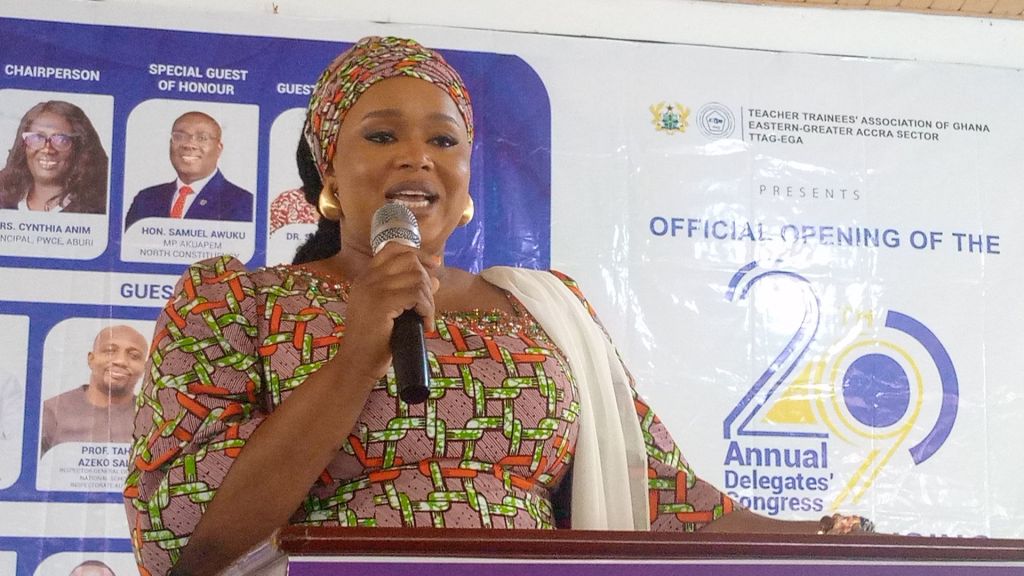
The Chief Executive Officer of the Student Loan Trust Fund, Dr. Saajida Shiraz, has disclosed that the government has allocated GH¢499.8 million for the reimbursement of all first-year students, including those in public Colleges of Education.
According to her, financial hurdles should not prevent any Ghanaian from pursuing higher education.
This initiative, implemented by President John Dramani Mahama, aims to eliminate one of the biggest barriers to accessing tertiary education.
Dr. Shiraz further revealed that all first-year students of public tertiary institutions, pursuing accredited diploma or degree programs, will be reimbursed for their academic user fees for the 2024/2025 academic year by the Student Loan Trust Fund under the No-Fees-Stress policy.
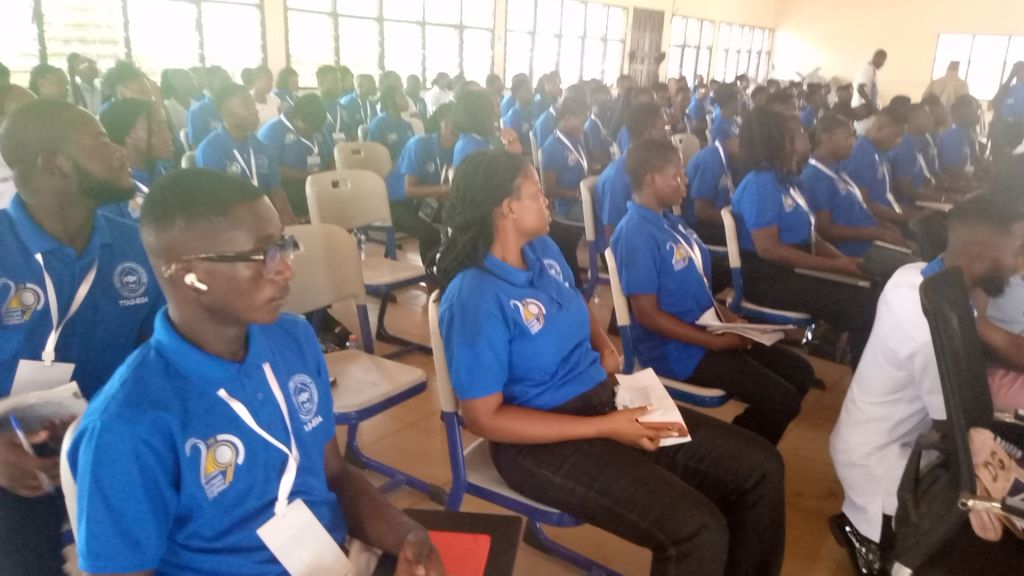
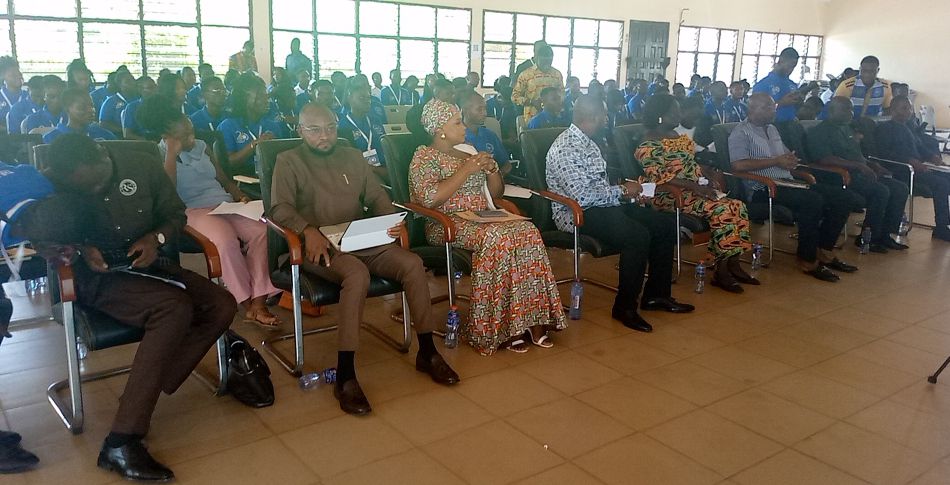
The CEO made this known during the opening ceremony of the 29th Annual Delegates Congress of the Teacher Trainees Association of Ghana (TTAG), Eastern and Greater Accra Zone, held at Presbyterian Women’s College of Education, Aburi, on Tuesday, May 13, 2025.
The No-Fees-Stress portal is accessible via nofeesstress.sltf.gov.gh, entreating all first-year students to get registered urgently to enable stakeholders fast-track the disbursement process.
Madam Cynthia Anim, the Principal of Presbyterian Women’s College of Education, said the theme for the program, “Reimagining Teacher Education in Ghana: Policy, Practice, and Partnership,” wasn’t just timely, but rather, it is urgent.
“It challenges us to step beyond traditional expectations and envision a new future in which we, as 21st-century educators, are not just conveyors of knowledge but torchbearers of transformation,” she opined.
Madam Anim further emphasized that trainee teachers go beyond instructors to architects of societies. The classroom, she noted, is their construction site, and the minds of pupils are the bricks and mortar with which they build Ghana’s future.

For his part, TTAG President for the Eastern and Greater Accra Sector, Kingsley Ayitey, said the association’s only source of income has been from members’ dues. These proceeds cater solely to administrative expenses, making it difficult to meet other financial obligations. As a result, the sector struggles to fund certain projects, programs, and initiatives.
“Another significant challenge is the absence of a secretariat and inadequate logistics, such as laptops, projectors, and printers, which makes coordinating events, training, and administrative running of the secretariat difficult. Upon assuming office, we inherited limited assets from the previous executives, which proved insufficient for effective administration,” he mentioned.
Ayitey stressed that the sector is grappled by infrastructural deficits in colleges, including inadequate lecture halls, limited access to technology and digital resources, and poorly maintained recreational facilities.
These shortcomings, he said negatively impact the quality of education and the overall well-being of teacher trainees.
He emphasized that addressing these issues requires urgent and collective action from stakeholders.
Echoing this sentiment, the former Deputy Chief Executive Officer of MASLOC, Obidombie Kwabena Asamoah, urged trainee teachers to add value to their profession to better position themselves for additional job opportunities that may arise.
By// Kontihen Kofi Oboh.
Source// Obohnewsonline.com.
 Obohnewsonline